
Life Coach vs. Therapist: How to Choose the Support You Need
Choosing between a life coach and a therapist isn’t about which kind of support is better. It’s about what you need right now. If you’re weighing the life coach vs therapist question, it makes sense to want clarity before taking a step. Both offer support, but they serve different purposes.
You may be looking for help finding direction, rebuilding confidence, or moving toward a personal goal. Or you may be carrying distress that feels hard to manage alone. Those needs deserve care, not pressure to choose quickly. Coaching can support forward-focused personal growth, but it isn’t a substitute for therapy or treatment for mental health conditions.
This article explains what coaching and therapy can offer, where their roles and limits differ, and what to consider when evaluating a provider. You’ll also learn when licensed mental health care may be the more appropriate place to begin and how to choose a thoughtful next step. You don’t need every answer today. A clearer understanding can help you move forward with care and confidence.
Table of Contents
Life Coach vs. Therapist: What Each Type of Support Is For
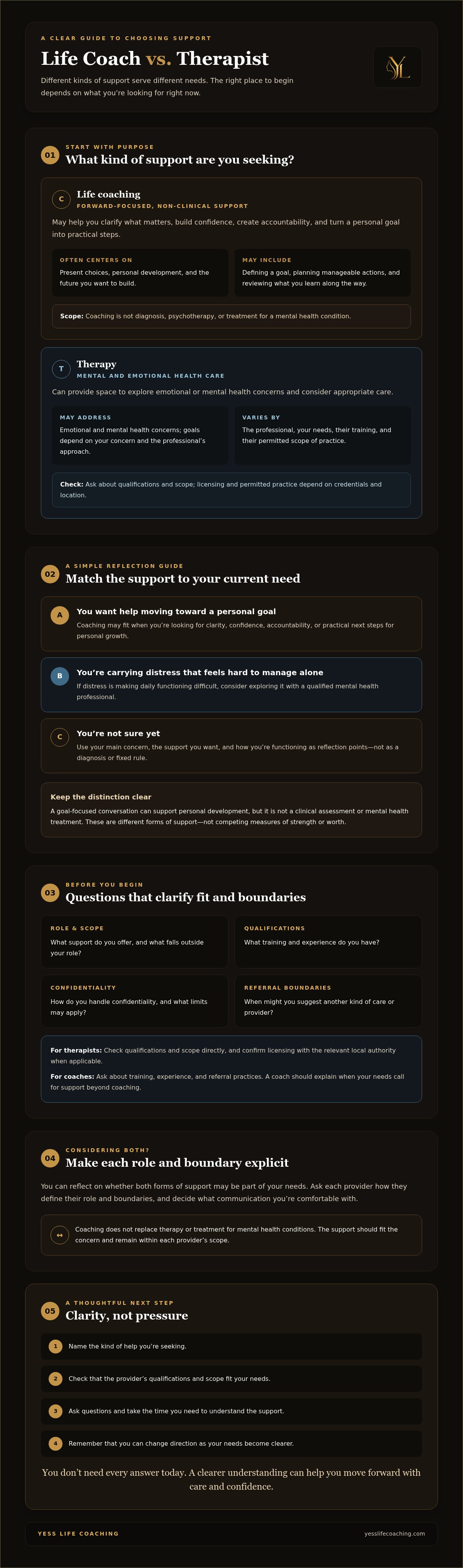
Choosing support can feel confusing, especially when both options involve thoughtful conversations and personal change. A useful starting point in the life coach vs therapist comparison is purpose: coaching generally supports goals and forward-focused growth, while therapy is care provided by qualified professionals within their training and permitted scope.
What does a life coach help you work toward?
A life coach may help you clarify what matters, build confidence, create accountability, and turn a desired change into practical steps. Sessions often focus on present choices and the future you want to build. For example, a coach might help you define a goal, break it into manageable actions, and review what you’ve learned as you go. The broad practice of Coaching can take different forms, so ask a coach how they work and what their support includes. Life coaching is non-clinical. It isn’t diagnosis, psychotherapy, or treatment for a mental health condition.
What does a therapist provide?
Therapy can offer a space to explore emotional or mental health concerns and consider appropriate care. The approach varies by professional, client, and concern. A therapist’s training, licensing, and permitted practice depend on their credentials and location. Check their qualifications and scope directly, and confirm licensing with the relevant local authority when applicable.
At a glance
Focus: Coaching often centers on goals, choices, and personal development. Therapy may address emotional and mental health concerns.
Typical goals: Coaching may help you define a desired change and take practical steps toward it. Therapy goals depend on your concerns and the professional’s approach.
Professional scope: Life coaching is non-clinical and does not provide diagnosis or mental health treatment. A therapist’s scope depends on their qualifications and local rules.
Referral boundaries: A coach should explain what falls outside coaching and refer you to appropriate care when your needs call for support beyond their role. A therapist can explain whether your concern fits their area of practice or whether another provider may be appropriate.
These are different forms of support, not competing measures of strength or worth. For women seeking structured, non-clinical help with personal growth, confidence, or life goals, YESS Life Coaching focuses on forward movement. That focus doesn’t make coaching a replacement for licensed mental health care. The right starting point depends on the help you’re seeking and whether the provider’s scope fits.
How Life Coaching and Therapy Differ in Goals, Methods, and Boundaries
Coaching and therapy can both involve honest conversation, but they have different aims and limits. Neither is automatically the better choice. The useful question in the life coach vs therapist decision is whether the support fits your concern and the kind of help you’re seeking.
How goals and session conversations may differ
Imagine you want to change careers. A coach might help you clarify what you want, compare your options, plan manageable next steps, and check in on those actions over time. Reflection and action planning can turn a broad intention into a path you can assess and adjust.
If distress is making daily functioning difficult, you may want to explore that with a qualified mental health professional. Therapy can include assessment or treatment, but the methods depend on the clinician’s training, your needs, and the wider context. Providers vary, so ask what their approach involves rather than assuming every session follows the same pattern.
Coaching is non-clinical goal support, while therapy may address clinical needs. That distinction is about scope, not whose experience matters more. A goal-focused conversation can support personal development, but it isn’t a clinical assessment or treatment.
What professional boundaries should you expect?
Before starting, ask the provider to explain their qualifications, the support they offer, and what falls outside their role. Ask how they handle confidentiality, what its limits may be, and when they might suggest another kind of care. Clear answers help you make an informed choice without needing to share more than feels right at first.
Professional titles, training, and regulation vary by location and credential. Check a therapist’s qualifications and scope with them and, where relevant, the local authority responsible for their profession. For a coach, ask about training, experience, and referral practices. A website description can explain a service, but it can’t establish a diagnosis. Neither can a coaching session.
Ask about scope: What concerns can this provider support, and what falls beyond their role?
Ask about privacy: How is information handled, and are there limits to confidentiality?
Ask about referrals: If your needs change or require different support, what next steps might they recommend?
For women seeking structured, non-clinical support with personal growth, confidence, or life goals, YESS Life Coaching is one option to explore. Its coaching is not licensed therapy or a replacement for mental health care. Let your needs, the provider’s answers, and your sense of safety guide your decision.
Life Coach vs. Therapist: Which Support Fits Your Current Situation?
You don’t need to label what you’re experiencing before seeking support. Start with three questions: What’s weighing on me most? What kind of help am I looking for? How is this affecting my ability to manage daily life? These prompts can help you reflect, but they aren’t a test or a diagnosis.
When might life coaching be a reasonable option?
If your main concern is clarifying a goal, building confidence, or planning a personal change, coaching may be worth exploring. You might want help deciding what you want next, identifying practical steps, or staying accountable to choices you’ve made. You remain the decision-maker. Coaching can add structure, but it can’t promise a particular outcome or replace mental health care.
YESS Life Coaching offers non-clinical coaching for women focused on personal and professional development. To understand what coaching can look like in practice, you can also explore the planned article What Does a Life Coach Do? Real Scope and Support Explained.
When should you consider speaking with a therapist?
If distress, symptoms, or changes in daily functioning concern you, consider discussing them with a qualified mental health professional. You don’t need to decide for yourself whether those concerns meet a clinical threshold. Describe what you’re experiencing and ask whether the professional’s training and scope fit your needs.
For urgent or immediate safety concerns, contact local emergency or crisis support. Coaching isn’t emergency care. Seeking more appropriate support is a protective step, not a failure to manage things on your own.
Questions to help you assess fit
The life coach vs therapist decision can become clearer when you ask providers direct questions. You might ask, “Does my concern fall within your scope?” or “What kind of support do you offer, and what would lead you to recommend another provider?” Their answers can help you understand the boundaries before you begin.
Main concern: Am I looking for help with goals and next steps, or do I want to discuss distress that may need clinical care?
Desired support: Would reflection, action planning, and accountability feel useful, or am I seeking assessment or treatment?
Current functioning: Is this concern affecting my ability to manage daily responsibilities or care for myself?
Your answers don’t lock you into one path. Needs can change, and you can ask questions, pause, or seek a different provider. The goal isn’t to choose perfectly on the first try. It’s to take a considered next step that respects both your goals and your wellbeing.
Can You Work With a Life Coach and a Therapist at the Same Time?
Some people consider both forms of support, but combining them isn’t automatically helpful or appropriate. It depends on your needs, the goals you bring to each relationship, and whether the roles remain clear. Coaching must not replace, supervise, or change a therapist’s clinical care. If you’re considering both, discuss your plan with each provider and ask how their boundaries apply.
Questions to ask before starting either service
Direct questions can help you understand what each provider offers before you begin. Consider asking:
What is within your scope? What can you support, what falls outside your role, and how do you handle referrals if I need different care?
How do you handle privacy? What information is confidential, and under what circumstances might confidentiality have limits?
How will we review progress? How will we discuss whether the support is useful, and what might happen if my needs change?
How do you approach other support? If I’m also working with another provider, what information would you need, and how would you use it?
You can ask about communication without agreeing to share everything. If providers communicate, clarify what information you consent to share and how that exchange would happen. Privacy practices and their limits can vary, so ask each provider directly.
How to keep the roles clear if you use both
Give each relationship a distinct purpose. For example, you might work with a therapist on clinical concerns and use coaching for a separate personal goal, if that fits your needs and the providers’ guidance. The roles shouldn’t blur: a coach doesn’t direct treatment, and coaching conversations shouldn’t be presented as clinical care.
When it feels comfortable and relevant, tell each provider that you have other support. You can ask your therapist whether adding coaching seems appropriate for your situation, and ask a coach how they respond when a concern falls outside coaching. You don’t have to authorize provider-to-provider communication. Discuss your preferences and consent before any information is shared.
Pay attention to whether boundaries feel respectful. If a provider dismisses clinical care you need, promises to treat concerns outside their scope, or leaves you unsure about who is responsible for what, pause and seek clarification. You’re allowed to reassess the arrangement or look for another provider. A good fit should make the roles clearer, not leave you feeling pulled between them.
If you’re a woman exploring non-clinical coaching for personal or professional growth, you can learn about YESS Life Coaching and consider whether its stated focus matches your goal. Coaching is one support option, not a substitute for licensed therapy.
Choose Your Next Step With Clarity, Not Pressure
You don’t have to make a perfect decision today. The life coach vs therapist question becomes more manageable when you slow it down: name what you need, consider the provider’s scope, ask clear questions, then decide whether the fit feels right. You can change direction or seek another opinion if your needs shift.
A simple four-step way to move forward
Name your need. Write down what you want help with and what a helpful outcome might look like. For example, you may want to clarify a personal goal or find support for distress affecting your daily life.
Consider the kind of support. Ask whether your concern seems suited to non-clinical, goal-focused coaching, calls for clinical support, or would benefit from guidance from a qualified professional before you decide.
Check the provider’s scope. Ask about their qualifications, approach, boundaries, and how they handle referrals when someone needs support beyond their role. You can also ask how they’ll review whether the support remains a good fit.
Choose, then reassess. Make your next decision based on the answers you receive and what feels appropriate for your needs. Starting with one option doesn’t mean you must stay with it if the fit changes.
If you’re considering coaching, How to Choose a Life Coach: Finding Alignment and Depth can offer another perspective on the provider’s approach and whether it matches what you’re seeking.
What YESS Life Coaching can and cannot offer
YESS Life Coaching offers non-clinical coaching for women focused on personal growth, confidence, mindset, and life goals. This may suit someone seeking structured support for self-directed development. Coaching doesn’t promise a specific outcome, and exploring it is your choice.
Clear boundaries matter. YESS does not provide licensed therapy, psychotherapy, or crisis intervention, and its coaching isn’t treatment for mental health conditions. If you need clinical or urgent support, seek an appropriate qualified professional or local support service rather than relying on coaching.
If non-clinical coaching for your personal or professional goals feels aligned, you can learn about YESS Life Coaching and consider whether its focus fits what you’re looking for. There’s no need to rush. A thoughtful next step is enough.
Choose Support That Respects Your Needs
The life coach vs therapist decision starts with what you need now. Coaching can provide structured, non-clinical support for personal growth and life goals. Therapy may be the appropriate path when you’re seeking clinical care. Neither option fits everyone, and you’re allowed to ask questions, change direction, or seek another opinion.
YESS Life Coaching offers structured one-on-one and group coaching for women focused on personal growth, confidence, mindset, and life goals. It does not provide licensed therapy, psychotherapy, or crisis support. Clear boundaries help you choose support with care, not pressure.
If non-clinical coaching feels aligned with what you’re seeking, explore life coaching for women with YESS Life Coaching. Take your next step at your own pace, with clarity about the support you want.
Frequently Asked Questions
Is a life coach the same as a therapist?
No. A life coach and a therapist have different roles. Coaching generally offers non-clinical support with goals, reflection, confidence, and personal development. Therapy is care provided by a qualified professional within their training and permitted scope, and may include clinical assessment or treatment. When comparing the two, focus on the kind of support you need and verify each provider’s qualifications and boundaries.
Can a life coach help with anxiety or depression?
A life coach can’t diagnose or treat anxiety or depression. Coaching may support non-clinical goals, but it isn’t a substitute for mental health care. If anxiety, low mood, or other concerns are affecting your wellbeing or daily life, consider speaking with a qualified mental health professional. You can ask a coach whether your goals fall within their scope and how they would respond if you need clinical support.
How do I know whether I need a life coach or therapist?
Consider your main concern, the support you want, and how the concern affects daily life. If you’re seeking help clarifying goals or planning a personal change, coaching may be relevant. If you’re concerned about distress or symptoms and need clinical care, speak with a qualified mental health professional. The life coach vs therapist choice isn’t a diagnosis. Ask providers directly whether your needs fit their scope.
Can you see a life coach and therapist at the same time?
Some people consider both, but whether that makes sense depends on their needs and the providers’ guidance. Keep the roles distinct: a therapist’s clinical care shouldn’t be replaced, supervised, or altered by coaching. If you feel comfortable, tell each provider about the other support and discuss what information you consent to share. Ask how each provider handles boundaries, privacy, and referrals if your needs change.
Do life coaches have to be licensed?
Licensing rules vary by location and profession. Life coaching generally isn’t government-licensed in many places, but check the rules where you live rather than assuming they’re universal. A coach may have training or voluntary credentials, but these don’t automatically mean they’re licensed to provide therapy. Ask about relevant education and experience, and verify any claims with the issuing organization or local authority.
What should I ask a life coach before working with them?
Ask what the coach can and can’t support, what their training and experience are, and how they structure sessions around your goals. Clarify how they handle privacy, including any limits to confidentiality, and what they do if your needs fall outside coaching. You might ask, “How would you respond if I needed clinical care?” Clear answers can help you understand the boundaries before deciding whether to begin.
Can a life coach diagnose a mental health condition?
No. Life coaching is non-clinical and doesn’t establish a mental health diagnosis. A coach may listen to what you share, but a coaching conversation or website description can’t determine whether you have a condition. If you’re concerned about symptoms or need an assessment, contact a qualified mental health professional whose credentials and scope fit your location. A coach should be clear about these limits and referral options.